About Moxa
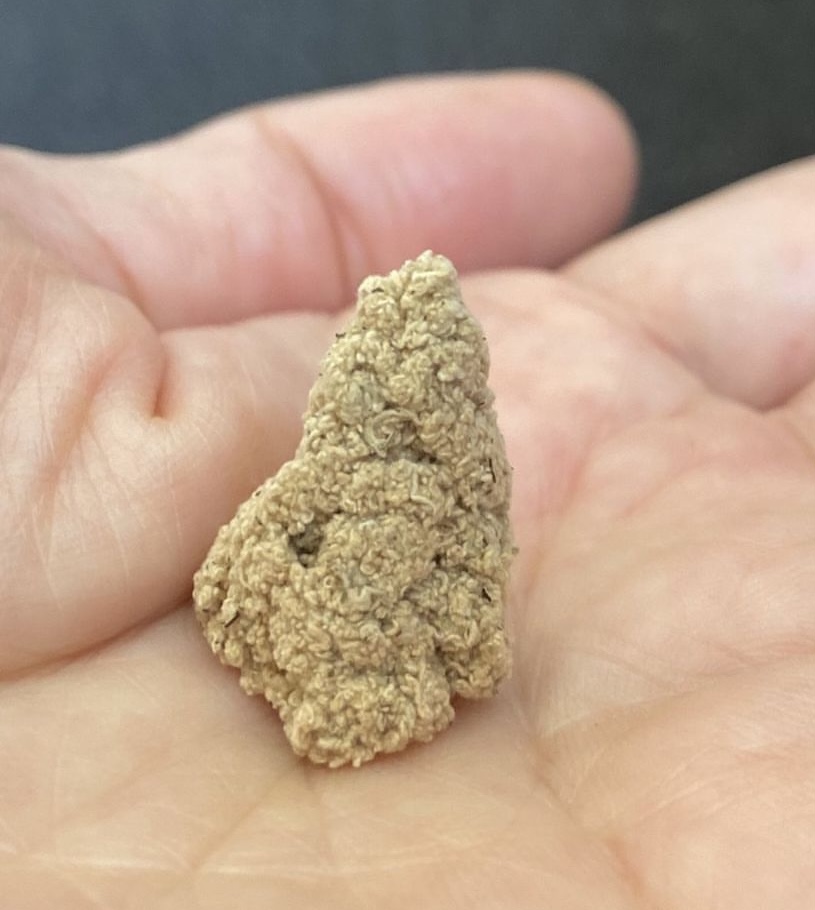
Moxibustion is one of the practices in Traditional Chinese/Japanese Medicine which involves burning small cones of ‘Moxa’ directly on the skin at specific points on the body.
Whilst Acupuncture has settled well in Australia and around the world, my impression is that Moxibustion has not yet landed with full appreciation. It is my mission to introduce Moxibustion to you.
According to Merlin (2012), historically, Moxibustion can best be described as Acupuncture’s slightly older half-breed orphaned sibling. The earliest genuine evidence of Acupuncture shows that it emerged from the early Han Dynasty (206BC). This means that Moxa has been practiced for well over two thousand years! There is even documented evidence of mugwort’s use in early English shamanic traditions which pre-date Christianity, where it is listed as one of the nine sacred herbs.
Moxa is made of an herb called Mugwort. Mugwort is a weed which flourishes in poor, dry and sandy soil and has over two hundred strains. Whilst Artemisia Vulgaris Latiflora is widely used for moxa production, other types such as Artemisia Montana, Artemisia Princeps, Artemisia Argyii, Artemisia Indica and Artemisia Chinsis are often preferred.
Moxa is made from the hairs on the back of the leaves of the plant. The resulting material is extraordinarily rich in a large number of trace elements, oils and minerals. Certain locations, in both China and Japan, have been traditionally favoured for growing mugwort for moxa production.
Detailed information regarding the history of moxa can be found in the phenomenal book called “Moon Over Matsushima” by Merlin Young (2012). Detailed techniques for moxa production are also discussed in this book.
How Moxibustion Works
Moxa cones are placed on certain points over the body and gently burned. As with Acupuncture, these points are chosen and placed with great care and precision to produce the very best results.
Moxibustion can dredge meridians and regulate qi-blood and has been used to prevent and treat a great range of diseases. A bibliometric analysis of papers published from 1954 to 2007 in China showed that up to 364 kinds of disease can be treated with Moxibustion (Zhen, 2017).
The roles of moxibustion can be broadly grouped into “warm nourishing”, “warm dredging”, and “warm melting”. Some people believe that warm dredging is the nature of moxibustion and is the key role of moxibustion effects. The examples of its functions are (Zhen, 2017):
- Expelling Cold
- Clearing Away Heat
- Detoxification
- Warming Yang
- Tonifying Qi
- Nurturing Blood
- Activating Blood
- Dissolving Stasis
- Dredging Channels
- Relieving Pain
- Reducing Phlegm
- Removing Wind
- Dispelling Dampness
- Drawing Out Poison
Fukaya kyu (Fukaya style of Moxibustion)
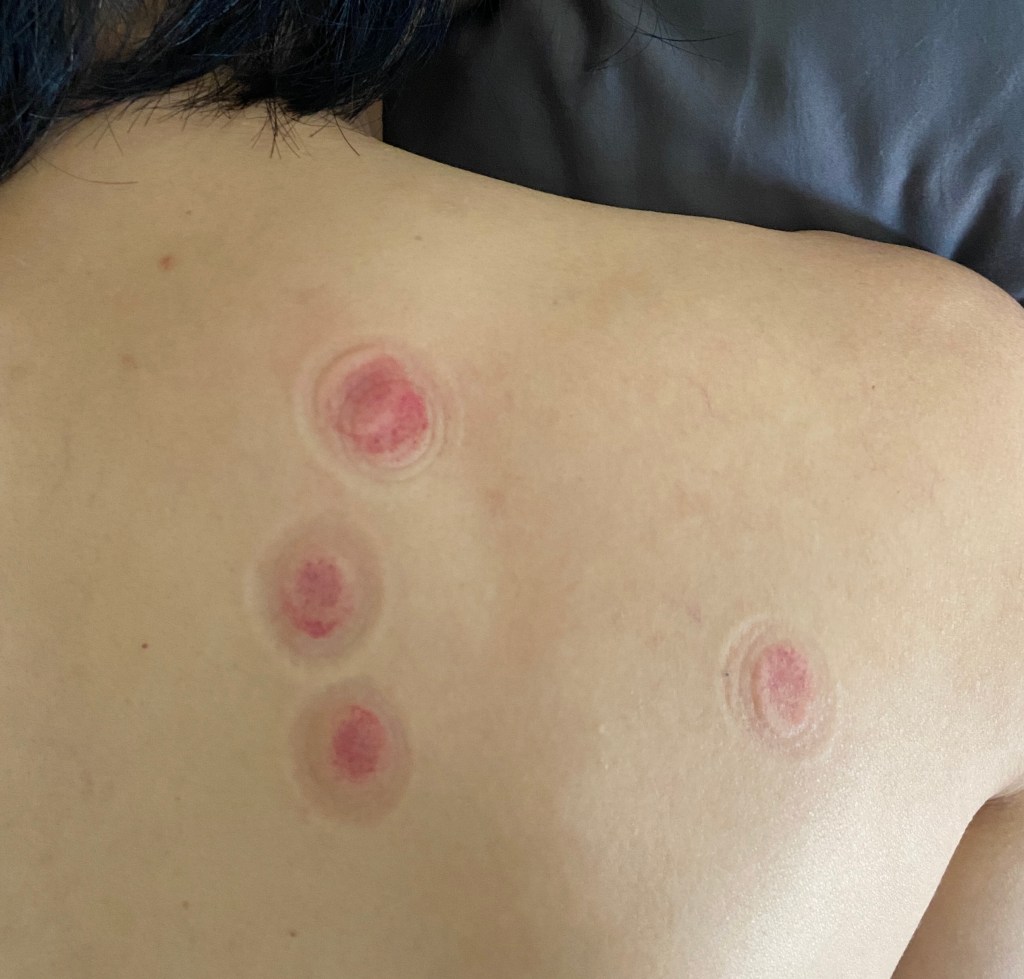
I am particularly interested in and practice the Fukaya style of Moxibustion. Isaburo Fukaya (1900-1974) developed this modern approach to the tradition of moxibustion in the mid-20th Century in Japan.
Some of the distinctive characteristics of this method include (Shinma, 2005):
- Use of ‘alive points’, mainly on the upper back. The alive points are identified by palpation on the spine and channels along the upper back. Of course, we are not limited only to the back, and sometimes moxa is placed on the arms, hands, legs, and feet as needed.
- Use of “direct moxa”. Moxa is rolled into small cones, half the size of a grain of rice, and placed directly on the skin. In my practice I use a shield on the skin to avoid burns and blisters.
- Use of a bamboo tube. In the Fukaya method, we use Fukaya’s bamboo tube for a number of specific purposes: to reduce the moxa heat so that it is easier on a patient and does not cause blistering or burning; to detect live points during palpitation; and to create suction to release the stagnation of Qi/Blood, just like in cupping therapy.
References
Deng, H., & Shen, X. (2013). The Mechanism of Moxibustion: Ancient Theory and Modern Research. Evidence-Based Complementary and Alternative Medicine, 2013.
Young, M. (2012). The Moon Over Matsushima: Insights Into Moxa and Mugwort. Godiva Books.
Shinma, H. (2005). The Treasure Book of Points. Fukayakyu. Hideo Shinma, Tokyo.
 Yamasan Shinkyu